Contractor Resume from Your LinkedIn Profile
Transform your LinkedIn profile into a compelling contractor resume that showcases your diverse project experience, rapid adaptability, and proven delivery across multiple client engagements. Highlight your contract work history, project-based achievements, client relationships, and specialized expertise with an ATS-friendly format optimized for contract roles, consulting positions, and freelance opportunities through staffing agencies and direct client relationships.
Contractor Resume from LinkedIn - Independent Contractor & Contract Worker CV
Why Contractors Need Specialized Resume Strategies
The world of contract work demands a resume that stands apart from traditional full-time employment formats. As a contractor, your professional narrative is built on project diversity, rapid onboarding capabilities, adaptability across different organizational cultures, and consistent delivery despite changing environments. Li2CV transforms your LinkedIn profile into a strategically formatted contractor resume that emphasizes your contract work history, highlights the breadth and depth of your project experience, showcases your ability to quickly integrate into new teams and deliver value immediately, and demonstrates the specialized expertise that makes you valuable across multiple client engagements. Whether you work through staffing agencies on W2 contracts, operate as an independent 1099 contractor, take on consulting engagements, or combine contract and permanent roles throughout your career, our tool creates a resume that presents your varied experience as a strategic advantage rather than a liability. Contract work is no longer an alternative career path but increasingly the preferred working model for experienced professionals who value autonomy, variety, and the opportunity to work on diverse challenging projects without the constraints of traditional employment.
- Project-Based Achievement Focus
- Contractor resumes must emphasize project delivery and tangible outcomes rather than job tenure and career progression within organizations. Your value as a contractor lies in your ability to step into challenging situations, quickly understand requirements and context, deliver specific project outcomes on time and within budget, and successfully hand off work at engagement completion. Li2CV restructures your LinkedIn experience to highlight each contract engagement as a distinct achievement with clear scope, deliverables, and results. Rather than listing responsibilities over years in a position, your resume presents each project as a complete success story with the problem or opportunity, your approach and contributions, the technologies and methodologies employed, and the quantifiable outcomes achieved. This project-centric view resonates with hiring managers and procurement teams who think in terms of discrete engagements and deliverables rather than long-term employee development. Each bullet point demonstrates not what you were responsible for but what you actually accomplished and delivered, proving your ability to create value quickly in time-limited engagements where there is no room for extended learning curves or ramping periods.
- Rapid Onboarding and Immediate Value
- The most critical skill for contractors is the ability to become productive immediately without the extensive onboarding and mentoring that permanent employees might receive. Your resume must demonstrate that you hit the ground running in every engagement, requiring minimal handholding or context building before contributing meaningfully. Li2CV highlights indicators of your quick-start capability including experience across multiple companies and teams demonstrating repeated successful onboarding, achievements delivered early in engagements showing fast comprehension and action, experience with various technology stacks proving adaptability to new tools and environments, evidence of independent problem-solving and self-direction, and examples of knowledge transfer and documentation you created to help others. Hiring managers choosing contractors over full-time employees are explicitly trading the permanence of employment for immediate productivity, so your resume must prove you deliver on this value proposition. Whether you have jumped into legacy codebases and quickly diagnosed issues, joined mid-project and accelerated delivery, or started greenfield projects with minimal existing structure, your pattern of rapid effectiveness is the central narrative that makes you attractive for contract roles where time is literally money and slow ramps are unacceptable.
- Diverse Experience as Strategic Advantage
- While traditional career advice often warns against appearing like a job hopper, the contractor resume reframes varied experience across multiple companies, industries, and project types as a powerful advantage. Your exposure to different organizational cultures, technology stacks, development methodologies, team structures, and problem domains makes you more valuable, not less. Li2CV organizes your LinkedIn history to showcase the breadth of contexts in which you have successfully delivered including different company sizes from startups to enterprises, various industries such as finance, healthcare, technology, retail, or manufacturing, diverse technical environments including different cloud platforms, programming languages, and architectural patterns, range of team sizes and structures from solo work to large coordinated efforts, and various engagement types including greenfield development, legacy modernization, rescue projects, and steady-state maintenance. This diversity proves you are not dependent on a specific environment or toolkit but can adapt to whatever situation you encounter. Companies hiring contractors specifically value this adaptability because they need someone who can work within their existing environment rather than requiring the environment be adapted to the employee. Your varied background demonstrates pattern recognition across contexts that lets you identify solutions faster than someone with narrow experience, even if that person has spent more total years in the field.
- Client Relationship and Communication Excellence
- Contractors must excel at stakeholder management and communication since they often lack the organizational context and relationships that permanent employees build over time. Your resume should demonstrate your ability to establish credibility quickly with new stakeholders, communicate technical concepts to diverse audiences including non-technical clients, manage expectations around scope, timeline, and deliverables, navigate organizational politics and competing priorities as an outsider, and maintain productive relationships despite the transactional nature of contract work. Li2CV highlights evidence of your client management skills such as contract renewals or extensions indicating client satisfaction, references or testimonials from previous clients, experience interfacing directly with executive stakeholders, examples of managing scope changes or difficult conversations, and deliverables that required extensive client collaboration and consensus building. The reality of contract work is that you are always proving your value and justifying your rate, unlike permanent employees who have more latitude for occasional under-performance. Your resume must show you understand this dynamic and consistently exceed expectations because your next contract depends on the strength of your current relationships and reputation. Companies hiring contractors want professionals who can manage themselves and their stakeholder relationships without requiring oversight, making communication skills as important as technical capabilities.
- Specialized Expertise and Niche Focus
- While permanent employees may be generalists who grow into specialized roles over years within a company, contractors are often hired precisely for deep expertise in specific domains, technologies, or types of projects. Your resume should clearly articulate your areas of specialization and the specific problems you solve better than generalists or less experienced professionals. Li2CV organizes your experience to highlight your niche whether that is expertise in particular technologies like SAP, Salesforce, or specific cloud platforms, deep domain knowledge in areas like healthcare compliance, financial systems, or supply chain optimization, specialization in certain project types such as system migrations, legacy modernization, or cloud transformations, or mastery of specific methodologies like Agile coaching, DevOps implementation, or data governance. This specialization positioning is critical because companies hiring contractors are typically facing challenges their permanent staff cannot handle, whether due to lack of expertise, capacity constraints, or need for outside perspective. Your resume must immediately communicate what makes you worth the premium cost of contract labor compared to using internal resources. The more clearly you articulate your specialized value proposition, the better you can command high rates and attract quality engagements rather than competing primarily on price for generic roles.
- Contract Work History Presentation
- The structure of contractor resumes must handle the unique challenge of presenting multiple short-term engagements in a way that appears stable and purposeful rather than chaotic or unstable. Li2CV uses formatting strategies specifically designed for contract work including grouping contracts by staffing agency or consulting firm when relevant to show continuity, clearly labeling each engagement as contract work to set appropriate expectations, using project-based formatting that emphasizes deliverables over tenure, highlighting patterns of contract extensions and renewals showing client satisfaction, and organizing experience thematically by specialization when appropriate rather than strictly chronologically. The resume makes explicit that frequent job changes are inherent to contract work rather than indicating problems with job performance or commitment. For contractors who mix permanent and contract roles, the distinction is clearly marked so reviewers understand your career strategy. If you work through specific agencies consistently, this relationship can be featured prominently as it demonstrates trust and repeated business. The goal is helping reviewers who may be accustomed to traditional employment patterns understand that your work history reflects the nature of contract engagements rather than any instability or performance issues, reframing what might otherwise appear as weakness into the expected pattern for successful contract professionals.
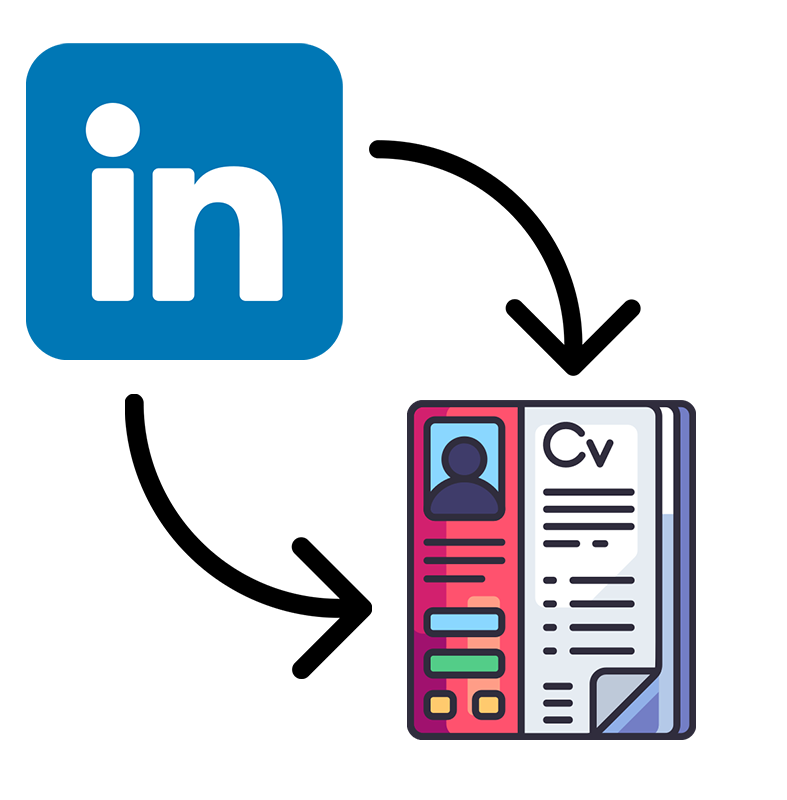
Simple Process
How to Create Your Contractor Resume from LinkedIn
- Step 1
-
Enter your LinkedIn profile URL into Li2CV and let our system extract your complete professional history including all contract engagements, client projects, specialized skills, certifications, and technical expertise
- Step 2
-
Our specialized parser identifies contract-relevant details from your profile including distinct client engagements, project durations and outcomes, staffing agency relationships, technical specializations, and patterns of contract renewals or extensions that demonstrate client satisfaction
- Step 3
-
Review the automatically generated resume structure that presents each contract engagement as a project success story with clear deliverables, emphasizes your rapid onboarding and immediate productivity, showcases the diversity of your experience as an advantage, and highlights your specialized expertise
- Step 4
-
Customize your resume by selecting a format optimized for contract work that handles multiple short-term positions effectively, adjusting how W2 and 1099 contracts are presented based on your target opportunities, emphasizing client relationships and renewals, and tailoring your specialization focus to match target contract roles
- Step 5
-
Download your polished contractor resume in PDF format for online applications or DOCX format for further customization, with a layout that passes ATS screening while clearly communicating your value proposition for contract engagements

Key Benefits for Contract Professionals
- W2 Contract Positioning and Presentation
- W2 contractors work through staffing agencies or consulting firms who handle payroll, benefits, and administrative overhead while placing contractors at client sites. Your resume should strategically present these relationships by listing the staffing agency as your employer with client engagements noted as projects or clearly stating both the agency and client such as "Senior Developer at Microsoft via Robert Half Technology." Li2CV helps you present W2 contracts in the format that makes most sense for your situation and target roles. If you have worked consistently through respected agencies like TEKsystems, Insight Global, Robert Half, or Apex Systems, this relationship signals stability and professional vetting since these agencies maintain quality standards for their contractor pool. The resume highlights the benefits of W2 contracting including multiple client exposures while maintaining employment continuity, benefits and stability not available to 1099 contractors, professional development and support from agency relationships, and the prestige of clients you have accessed through agency relationships. For contractors who prefer W2 arrangements, the resume emphasizes your track record with agencies and patterns of repeat placements or long-term relationships showing you are a reliable resource agencies want to place repeatedly. This positioning helps you attract quality W2 opportunities rather than 1099 roles if that is your preference, or demonstrates versatility if you handle both engagement types. The key is framing agency relationships as professional networks that enable your access to premium clients rather than suggesting you cannot secure direct opportunities.
- 1099 Independent Contractor Expertise
- 1099 contractors operate as independent businesses responsible for their own taxes, insurance, business operations, and client acquisition. Your resume must demonstrate not just technical expertise but also the business acumen and self-management that successful independent contracting requires. Li2CV highlights your 1099 experience by emphasizing direct client relationships without intermediary agencies showing business development capability, evidence of repeat business and referrals demonstrating reputation and client satisfaction, the administrative and financial sophistication required for independent business operation, flexibility to structure engagements based on client needs, and premium positioning that justifies higher rates than W2 contracts. The resume may note your business structure whether sole proprietorship, LLC, or S-corp if relevant to your positioning, though this is optional depending on how you want to present yourself. For experienced 1099 contractors, the resume showcases your client roster if appropriate, patterns of multi-year client relationships or ongoing retainer arrangements, and examples of how you have grown engagements from initial small projects into long-term partnerships. The independent contractor positioning appeals to clients who want flexibility, specialized expertise, and professionals who operate as true business partners rather than temporary employees. This format emphasizes your autonomy, expertise, and business sophistication rather than just technical skills, positioning you for direct high-value client relationships rather than agency placements.
- Contract Extension and Renewal Showcase
- The strongest signal of contractor success is when clients extend contracts beyond the original term or bring you back for subsequent projects. Contract renewals demonstrate that you delivered value exceeding expectations, integrated well with the team and organization, proved the investment in your higher rate was worthwhile, and built relationships that clients wanted to maintain. Li2CV prominently features contract extensions in your resume by noting original contract duration versus actual time served such as "Initial 3-month contract extended to 14 months," highlighting contracts that were renewed multiple times showing sustained value delivery, emphasizing return engagements where clients brought you back for new projects after successful initial work, and quantifying the total relationship duration across multiple contracts with the same client. These extensions and renewals are powerful proof points that overcome potential skepticism about contractors. While some hiring managers worry that contractors lack commitment or longevity, repeated extensions prove that when clients have the option to bring you back, they choose to do so. This is arguably stronger validation than remaining in a permanent role where changing requires active effort and risk. Your pattern of extensions shows you are not just adequate but valuable enough that clients proactively fight to keep you despite the higher cost of contract labor. For contracts that ended at their planned term, noting the successful project completion and transition helps demonstrate the ending was planned rather than due to performance issues.
- Rapid Project Delivery and Quick Wins
- Contractors must demonstrate value quickly since clients are paying premium rates and expect immediate returns. Your resume should highlight achievements delivered early in engagements proving you ramp up faster than permanent hires or traditional consultants. Li2CV emphasizes quick wins in your contract history by showcasing achievements delivered in the first 30-60 days of engagements, examples of identifying and solving problems that had stymied internal teams, situations where you accelerated project timelines or rescued delayed initiatives, instances where you introduced best practices, tools, or approaches that had lasting impact beyond your engagement, and evidence of knowledge transfer that amplified your impact through enabling others. These early-engagement achievements prove your value proposition as a contractor who justifies premium rates through accelerated delivery and immediate impact. The resume might note specific timeframes like "Reduced deployment time by 70% within first month" or "Delivered MVP two weeks ahead of schedule enabling early market validation." This time-consciousness shows you understand that contractor engagements have different economics than permanent employment where impact might emerge over quarters or years. Clients hiring contractors need solutions now, and your resume proves you deliver on that expectation consistently. Even for longer contracts, highlighting the quick wins early in the engagement demonstrates you did not require lengthy ramp time but contributed from day one, making the investment in contractor rates worthwhile from the start.
- Diverse Technology Stack and Adaptability
- Contractors encounter varied technology environments across clients and must adapt quickly to unfamiliar stacks, toolchains, and development practices. Your resume showcases this adaptability through the breadth of technologies you have used in production including experience across multiple programming languages, frameworks, and paradigms, exposure to different cloud platforms such as AWS, Azure, and Google Cloud rather than just one, work with various database technologies both SQL and NoSQL, familiarity with different architectural patterns like microservices, serverless, and monolithic systems, and experience with diverse development tools, CI/CD pipelines, and infrastructure approaches. Li2CV organizes your technical skills to highlight both your core expertise where you are strongest and your adaptability to work effectively with adjacent technologies when client needs require it. Rather than appearing unfocused, this breadth demonstrates the pattern recognition and learning ability that lets you quickly become productive in new environments. The resume might include examples of learning new technologies quickly to meet project needs such as "Adapted to client's Kotlin codebase despite primary Java background, delivering production features within two weeks." This adaptability is a meta-skill that distinguishes strong contractors from specialists who require perfect environment matches. Companies hiring contractors cannot always offer ideal technology stacks and need professionals who work effectively with the systems already in place rather than requiring everything be adapted to their preferences.
- Problem-Solving and Crisis Management
- Contractors are often brought in specifically to address challenging situations that internal teams have struggled with, such as troubled projects, technical debt, knowledge gaps, or capacity constraints. Your resume should highlight your experience with these high-pressure scenarios and your track record of successfully resolving them. Li2CV emphasizes your problem-solving accomplishments including project rescue situations where you were brought in to recover failing initiatives, legacy system modernization where you navigated complex technical debt, knowledge transfer and documentation where you captured critical tribal knowledge at risk of being lost, team scaling scenarios where you helped grow capabilities quickly, and technical leadership during critical periods like major launches or incident response. These challenging engagement types prove you can handle ambiguity, pressure, and complexity rather than just executing predefined tasks in stable environments. The resume frames these difficulties as opportunities where you added particular value rather than as problems with the engagements. For example, "Brought in to rescue delayed migration project; implemented new approach that completed migration 30 days ahead of revised deadline" shows problem-solving capability while acknowledging the challenging starting point. Clients hiring contractors often face urgent problems and need confident professionals who can navigate chaos and ambiguity effectively, making this crisis-management capability a key differentiator for experienced contractors.
- Industry and Domain Diversity
- Contract work exposes you to multiple industries and business domains, building versatile knowledge that pure specialists may lack. Your resume should showcase this cross-industry experience as an advantage by highlighting the range of sectors where you have delivered projects such as financial services, healthcare, retail, manufacturing, technology, government, education, or others, demonstrating how domain knowledge from one industry informed solutions in another, showing adaptability to different regulatory environments and compliance requirements, proving ability to quickly learn domain-specific concepts and terminology, and emphasizing pattern recognition across industries that helps you identify solutions faster. Li2CV organizes your experience to make industry diversity visible and valuable rather than appearing scattered. The resume might group engagements thematically when appropriate such as all financial services projects together to show depth while also noting breadth across other sectors. For contractors who have worked across dramatically different domains like healthcare and entertainment, this range demonstrates remarkable adaptability and learning ability. The key is framing varied experience as strategic versatility that makes you valuable across contexts rather than suggesting lack of focus or commitment to a single industry. Many contractors intentionally seek varied experiences to maintain engagement and continue learning, and your resume should present this as a deliberate career strategy that benefits clients who get a professional with broader perspective than typical specialists.
- Remote and Distributed Work Expertise
- Many contract engagements operate remotely or across distributed teams, requiring specific capabilities for effective remote collaboration. Your resume should highlight your remote work experience particularly if contracting post-2020 when remote work became standard, by emphasizing successful delivery of remote contracts without requiring on-site presence, experience with distributed team collaboration tools and practices, ability to build relationships and communicate effectively without in-person interaction, self-management and accountability in remote environments, and experience across different time zones when relevant for global client work. Li2CV showcases your remote capabilities through noting engagements that were fully remote versus on-site or hybrid, highlighting tools and practices you employed for remote collaboration, emphasizing outcomes achieved despite geographic distance, and noting any experience managing remote teams or coordinating across locations. For contractors who have successfully delivered remote engagements, this capability dramatically expands your potential client pool beyond your immediate geography. The resume might note specific examples like "Delivered successful project while remote, collaborating with on-site team across eight time zones" to demonstrate sophisticated remote work capabilities. As remote contract work becomes standard, proving you are not just capable remotely but excel in distributed environments makes you attractive for the broadest range of opportunities. This is particularly important for contractors seeking to work with clients outside their local market where remote capability is essential.
- Staffing Agency Relationships and Network
- For contractors who work through agencies, your relationships with reputable staffing firms are valuable assets that provide access to opportunities, stability through consistent placements, and third-party validation of your skills and professionalism. Li2CV strategically presents your agency relationships by noting partnerships with well-regarded firms that have placed you multiple times, highlighting the quality and recognizability of clients you accessed through these relationships, emphasizing any preferred vendor or go-to contractor status you have achieved with agencies, noting agencies that have maintained relationships with you across years and multiple placements, and showcasing the range of agencies you work with if you maintain multiple relationships. The resume makes clear these are professional partnerships rather than dependency by showing you command quality placements and strong relationships. For contractors with long-term agency relationships, this stability can be featured prominently such as "Five-year relationship with Apex Systems including seven successful client placements" to show consistent demand for your skills. The resume might also note any internal awards, recognition, or feedback from agencies that demonstrate your status as a top contractor in their network. These relationships are particularly valuable for contractors who prefer W2 arrangements and want steady access to quality opportunities without managing independent business development. The key is positioning yourself as a professional who agencies compete to place rather than someone dependent on agencies for work, maintaining your positioning as a sought-after expert.
- Specialized Niche Expertise Positioning
- The most successful contractors often operate in specialized niches where deep expertise commands premium rates and consistent demand. Your resume should clearly establish your specialization and what makes you the go-to expert in your domain. Li2CV highlights your niche expertise through organizing experience to emphasize recurring patterns across your engagements whether that is technology specialization like Salesforce implementations, Oracle database performance tuning, or React Native mobile development, methodology focus such as Agile transformation, DevOps adoption, or security architecture, industry expertise including healthcare compliance, financial trading systems, or manufacturing optimization, or problem-type specialization like legacy system modernization, cloud migration, or data platform development. The resume demonstrates depth through noting certifications, specialized training, community involvement, thought leadership activities like conference speaking or writing, and the progression of increasingly sophisticated or high-stakes projects in your niche. This positioning justifies premium rates by making clear you provide specialized value that generalists cannot match. The narrower and more defensible your niche, the less you compete primarily on rate and the more you compete on expertise and results. The resume might include a professional summary that explicitly states your specialization such as "Healthcare data integration specialist with 12 years securing and optimizing FHIR-based interoperability solutions for hospital systems." This immediate clarity helps you attract ideal opportunities while filtering out poor-fit engagements, ultimately leading to better client matches and more satisfying work.
- Transition Between Contract and Permanent Roles
- Many professionals move between contract work and permanent employment throughout their careers based on personal circumstances, market conditions, or strategic career moves. Your resume should present this mixed history coherently without appearing indecisive or unstable. Li2CV handles combined permanent and contract experience by clearly distinguishing contract engagements from permanent roles using formatting and labels, explaining the strategic logic of transitions when relevant through positioning statements, emphasizing capabilities developed in permanent roles that enhance your contractor value and vice versa, and presenting your career as a thoughtful progression rather than random job changes. The resume helps reviewers understand that permanent experience provided foundation and depth while contract work expanded breadth and adaptability, creating a stronger professional overall. For professionals currently contracting but with significant permanent employment history, the resume shows this foundation without suggesting you are looking to return to permanent work unless that is your goal. Conversely, contractors seeking permanent roles can position contract work as valuable experience that provided rapid skill development and exposure to best practices across organizations while expressing readiness for the depth and continuity of permanent employment. The key is honest coherent positioning that helps reviewers understand your career logic and current goals rather than leaving them confused about your trajectory or commitment level.
- Rate Optimization and Value Justification
- Contractor rates vary dramatically based on skills, experience, specialization, market conditions, and how effectively you communicate value. Your resume is fundamentally a value justification document that explains why clients should pay premium rates for your services. Li2CV structures your experience to justify strong rates through demonstrating specialized expertise that is rare and valuable, showcasing achievements with measurable business impact and ROI, highlighting speed of delivery that makes higher rates economical through faster results, emphasizing quality that reduces downstream costs through fewer defects and rework, and noting risk mitigation through your experience handling challenging situations. The resume presents you as an investment that pays for itself through the results delivered rather than an expense to minimize. Specific quantified achievements are critical for rate justification such as "Optimization work reduced infrastructure costs by $200K annually, paying for engagement in first month." These ROI-positive examples prove your rates are reasonable when compared to value delivered. The resume also subtly communicates professionalism and expertise through quality writing, strategic organization, and evidence of sophisticated capabilities that support premium positioning. While your resume never states specific rates, it builds the perception that you are a senior expert worth top-tier contractor compensation rather than a commodity resource competing primarily on price. This positioning attracts better opportunities and enables stronger rate negotiations.
Frequently Asked Questions
- How should contractors explain frequent job changes without raising red flags?
- The key is clearly labeling positions as contract work and presenting them within the expected context of project-based engagements. Use explicit language like "Contract position," "6-month contract engagement," or "Independent consultant" so reviewers immediately understand these were time-limited roles by design rather than indications of job hopping or performance issues. Group contracts by agency when appropriate to show relationship continuity even across different client engagements. Include contract extensions and renewals to demonstrate client satisfaction such as "Initial 3-month contract extended to 12 months based on strong performance." When you have particularly short engagements, provide context about why such as "Emergency two-week engagement to resolve production incident" or "Four-week assessment project to evaluate architecture options." Consider using a projects-based format rather than traditional chronological resume structure to emphasize deliverables over tenure. In your summary or profile section, you might explicitly position yourself as a contract professional with statements like "Experienced technology consultant delivering specialized expertise across diverse client engagements." The goal is helping reviewers understand that your work history reflects the nature of contract work rather than instability, reframing what might appear as weakness in a traditional employment context as normal and expected for your professional model.
- Should my resume emphasize W2 or 1099 contract work differently?
- Yes, the two models have different implications and should be presented strategically based on your target opportunities. W2 contracts through agencies suggest stability, access to benefits, professional vetting by the agency, and integration into established client relationships. Emphasize your relationships with reputable staffing firms, the quality of clients accessed through these partnerships, and patterns of repeat placements showing agencies want to work with you consistently. List the agency as your employer with client noted as the engagement location, like "Senior Analyst at Accenture on client engagement with Goldman Sachs." This format shows employment continuity through the agency even as client engagements change. For 1099 work, emphasize your independent business operation, direct client relationships, business development capabilities, and entrepreneurial aspects of your practice. You might list yourself as "Independent Consultant" or your business entity name if you operate under one. Highlight repeat clients, referrals, and long-term relationships that demonstrate your business viability and reputation. If you do both types, distinguish them clearly and consider grouping by type depending on what you are targeting. For W2-focused contractors, lead with agency relationships and W2 experience. For independent consultants, emphasize direct client work and business sophistication. If you are flexible about engagement type, demonstrate capability with both models while emphasizing whichever is more substantial in your history. The key is making the distinction clear so your experience is interpreted correctly.
- How can I demonstrate stability and reliability as a contractor?
- Stability for contractors looks different than for permanent employees but is demonstrated through patterns of consistent work, client satisfaction, and professional relationships. Highlight contract extensions beyond original terms which prove clients wanted to keep you despite higher cost and effort compared to permanent staff. Note return engagements where clients brought you back for additional projects after successful initial work, showing sustained relationships even if not continuous. Feature testimonials, references, or client feedback if available to provide third-party validation of your reliability and performance. Emphasize long-term relationships with staffing agencies that place you repeatedly, demonstrating their trust and the consistent demand for your skills. Show continuous employment without gaps by maintaining steady contract work or explaining any breaks with productive activities like skill development, certifications, or planned sabbaticals. Demonstrate reliability through patterns of project completion, successful handoffs, and thorough documentation. Quantify your track record with statements like "Completed 23 consecutive client engagements with 100% of contracts completed successfully or extended by client request." Note any situations where you were brought in specifically based on reputation or referrals rather than open recruiting. The key is showing that while your employment structure differs from traditional models, you are highly dependable, consistently employed, and sought after rather than scrambling for work between contracts.
- What achievements best demonstrate contractor value on a resume?
- The most compelling contractor achievements emphasize rapid delivery, immediate impact, and clear business outcomes that justify premium rates. Highlight quick wins delivered early in engagements such as "Identified critical performance bottleneck in first week, implemented solution that improved response time by 60%." Showcase project completion metrics like "Delivered migration project two months ahead of schedule and 15% under budget." Emphasize business impact with quantified results including "Automation solution saved client estimated 2000 hours annually in manual processing." Note problem-solving in challenging scenarios such as "Rescued failing integration project, delivering go-live after implementing new architecture approach." Feature scale and complexity handled like "Managed cloud migration for 200+ microservices with zero downtime during cutover." Highlight knowledge transfer impact through "Created comprehensive documentation and training program that enabled client team to maintain solution independently." Show relationship success via "Initial three-month contract extended to 18 months based on strong client satisfaction." Include recognition and validation such as "Selected to lead subsequent phase based on successful delivery of initial engagement." The common thread is demonstrating that you delivered value exceeding your cost, solved problems client teams could not handle alone, and justified the premium investment in contract resources. Generic responsibility statements or vague claims are particularly weak for contractors since clients can hire permanent employees for routine work; your resume must prove you provide specialized value worth the premium.
- How should I present gaps between contracts on my resume?
- Gaps are more accepted for contractors than permanent employees since project-based work naturally creates transition periods, but you should still address them strategically. Short gaps of a few weeks between contracts are normal and need no explanation since client onboarding, contracting, and transitions take time. For longer gaps, consider whether they were truly unemployed periods or actually productive time you can frame positively. If you used the time for professional development, note activities like "Professional development period: Earned AWS Solutions Architect certification and completed advanced React training." If you worked on personal projects, include them as consulting work or independent projects with real deliverables. Deliberate sabbaticals for travel, family, or other priorities can be noted briefly without apology since the flexibility for planned breaks is often a reason professionals choose contracting. True unemployment due to market conditions or personal circumstances can be addressed briefly in cover letters if relevant but does not require explanation on the resume itself. The key is showing patterns of continuous contract work with normal transition periods rather than frequent extended gaps suggesting difficulty securing engagements. If you have substantial gaps, emphasize your recent continuous work and strong current trajectory. Consider using years-only dates rather than months if it helps present more continuous employment, though be prepared to explain actual dates in interviews. Remember that gaps are primarily concerning when they suggest obsolete skills or inability to find work, so anything you can do to demonstrate current relevance and demand for your capabilities addresses the underlying concern.
- Should I include rates or compensation information on my contractor resume?
- No, never include specific rate information on your resume. Rates should be discussed during conversations after you have demonstrated value and understood project scope, not advertised upfront where they lack context. Including rates creates several problems including anchoring negotiations at your stated number before understanding full project scope and value, potentially eliminating opportunities where clients would have paid more than your stated rate, making you appear unprofessional since rates are not typically included on resumes even for contractors, and dating your resume as rates change over time while resumes should be more evergreen. Your resume should instead build the perception that you are worth premium rates through the expertise, achievements, and value you demonstrate. Let the quality of your experience and results suggest appropriate rate ranges without stating specifics. Rates are influenced by many factors beyond experience including engagement duration, required availability, location requirements, technology stack, and client budget, so any stated rate lacks important context. During initial conversations, you might provide a rate range or ask about client budget, but keep this off the resume itself. The exception might be if you are explicitly listing contract positions on your website or contractor profile where rate transparency is expected in that context, but traditional resume format should not include rate information. Focus your resume on proving value and justifying premium positioning; handle rate discussions verbally once you have established mutual interest.
- How can contractors demonstrate thought leadership and industry presence?
- Contractors benefit significantly from personal brand and industry visibility since much contract work comes through reputation and networks rather than job postings. Demonstrate thought leadership through conference speaking at industry events, user groups, or virtual conferences showing recognized expertise, published articles or blog posts on industry platforms, trade publications, or personal blogs, open source contributions to respected projects or maintenance of your own widely-used tools, active participation in professional communities through forums, social media, or industry groups, teaching activities like workshops, courses, or mentoring programs, and podcast appearances or webinar presentations on your areas of expertise. List these activities in a dedicated section on your resume like "Speaking Engagements," "Publications," or "Industry Involvement" depending on which are most substantial. Include specific details like conference names and presentation titles rather than just stating "regular speaker." For published work, include titles and publication names with links if available digitally. This thought leadership serves multiple purposes including differentiating you from contractors competing primarily on rates, providing evidence of deep expertise beyond just work experience, demonstrating communication skills and comfort with visibility, creating conversation topics for interviews and networking, and establishing you as an expert rather than just a skilled practitioner. Even modest activities like writing technical blog posts or speaking at local meetups are worth including as they show initiative and knowledge sharing. The most successful contractors are often those who have invested in building recognizable expertise and industry presence rather than just completing engagements.
- What certifications are most valuable for contractors to include?
- Valuable certifications depend on your specialization but generally fall into several categories. Technology-specific certifications for contractors working with particular platforms like AWS Certified Solutions Architect or Developer, Microsoft Azure certifications, Google Cloud Professional certifications, Salesforce certifications, SAP certifications, or vendor-specific credentials relevant to your niche. These prove validated expertise and may be required for certain engagements. Methodology certifications including Project Management Professional (PMP), Certified ScrumMaster (CSM) or other Agile certifications, ITIL for IT service management, or Six Sigma for process improvement. Security certifications such as CISSP, CEH, or CompTIA Security+ particularly valuable for contractors working in security-sensitive industries. Domain-specific certifications for healthcare like Epic or Cerner certifications, finance certifications like CFA or Series licenses, or specialized technical certifications in your niche. The key is relevance to your target contracts rather than accumulating certifications broadly. One highly relevant certification is worth more than several generic ones. Contractors should prioritize certifications that clients specifically request in job descriptions, validate specialized expertise that justifies premium rates, are widely recognized in your target industries, and require substantial expertise to earn rather than just completing a course. Keep certifications current since expired credentials suggest you are not maintaining expertise. Note if certifications are in progress if relevant to current opportunities. Include certification numbers or links to verify credentials if possible. The resume should list certifications prominently in a dedicated section since they provide quick validation of expertise that can differentiate you from less credentialed contractors competing for the same opportunities.
Related Topics

Ready to Get Started?
Join thousands of professionals who have already transformed their LinkedIn profiles into stunning CVs. Start your free trial today and experience the easiest way to create professional resumes.
No credit card required. Start generating CVs in minutes.
Explore More CV & Resume Tools
Li2CV - The fastest way to convert your LinkedIn profile into a professional CV. Try it free